Roof Replacement or Repair? How to Evaluate Your Mid-Michigan Roof
With roof issues, one of the most significant questions homeowners have is whether the problem is small enough for a patch or repair, or if it’s time to replace the roof entirely. We have over a decade of experience at Ramley helping Mid-Michigan homeowners like you decide what solution their roof needs.
When getting the answer right can save you thousands, it’s important to know and identify signs of damage early, and take action to safeguard your home against additional damage. Here’s a checklist of things you can check from the ground and from the roof to determine the health of your homes roof.
What You Can Check From the Ground
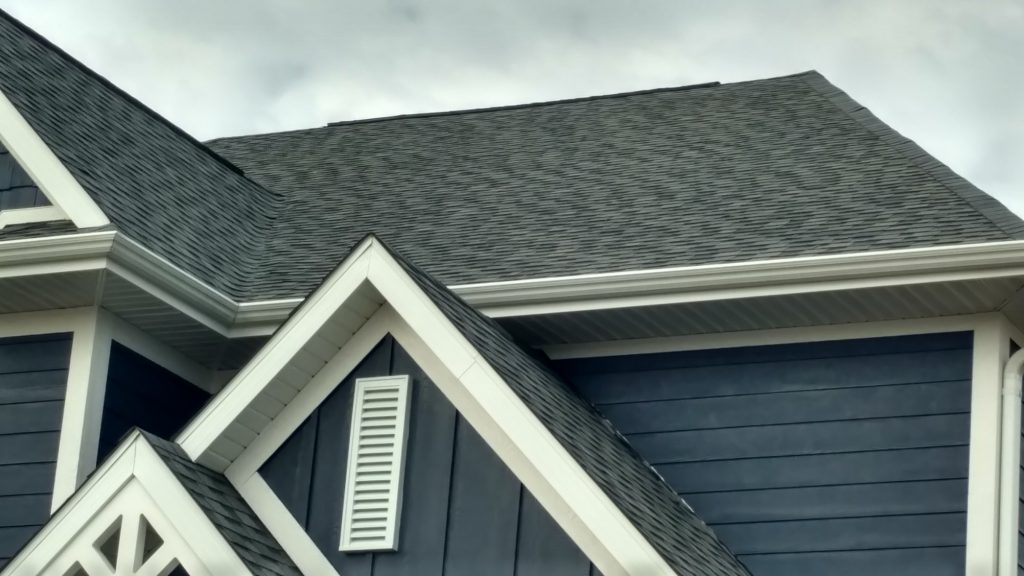
Get out a pair of binoculars or use the zoom on your phone—and remain safely on the ground as you search for these indicators:
Curled, Cracked, or Missing Shingles
Curling-up-at-the-edges, cracked-down-the-middle, or altogether missing shingles are some of the early warning signs of wear and tear.
A handy homeowner can generally replace some rotten shingles. But if you’re noticing the issue in multiple spots—or, worse, everywhere—it’s time to discuss replacement.
Discoloration or Dark Streaks
If your roof appears to be blotchy or discolored, it may be algae, mold, or water stains. Extensive streaks may be a sign of moisture penetration below the surface and indicative of a bigger issue.
If you catch and treat these spots early, you may be able to avoid or delay larger, more expensive, and time-intensive repairs.
Sagging or Uneven Roof Lines Are Visible
Your roof should be flat and even from edge to ridge. Any visible dips or waves may indicate structural problems, usually demanding more than a patch job.
Granule Loss or Debris Piles in Gutters
As shingles age, they lose their protective granules—usually ending up in your gutters or at your downspouts. Some granules are normal over time, but a large amount indicates your shingles are wearing out quickly.
Evidence of Animal or Insect Activity
Birds nesting in eaves? Squirrels in your attic? These aren’t just critter issues—they’re roof access issues. Small openings or weaknesses they use could translate to expensive repairs down the line if not caught early.
What to Inspect On the Roof (and How to Be Safe)
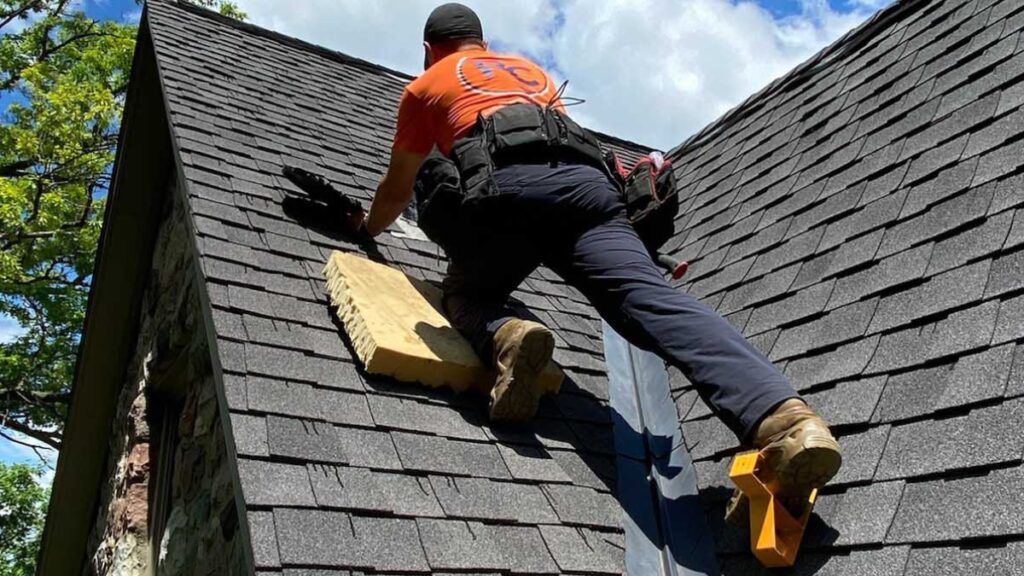
While most signs can be spotted from the ground, there are a few things a roofing professional—or very experienced DIYer—will check more closely from the top.
Safety First: We do not advise homeowners to climb up themselves unless you possess the proper safety equipment, footwear, and experience. It is easy to slip, misjudge a soft spot, or inflict more damage.
If you’re bringing in a professional (such as our crew at Ramley), here’s what we’ll examine:
Chimney Seals and Flashing
We inspect around chimneys, vents, and skylights for flashing that’s rusted, caulk that’s cracked, or seals that have loosened.
These are typical leak areas and usually easy fixes—if you catch it early.
Spongy Areas or Soft Spots
We walk cautiously on the roof, feeling for soft spots or sagging that might signal rot in the roof decking beneath the shingles.
Such a structural problem generally signals a larger repair—or even replacement.
Fastener Problems and Nail Pops
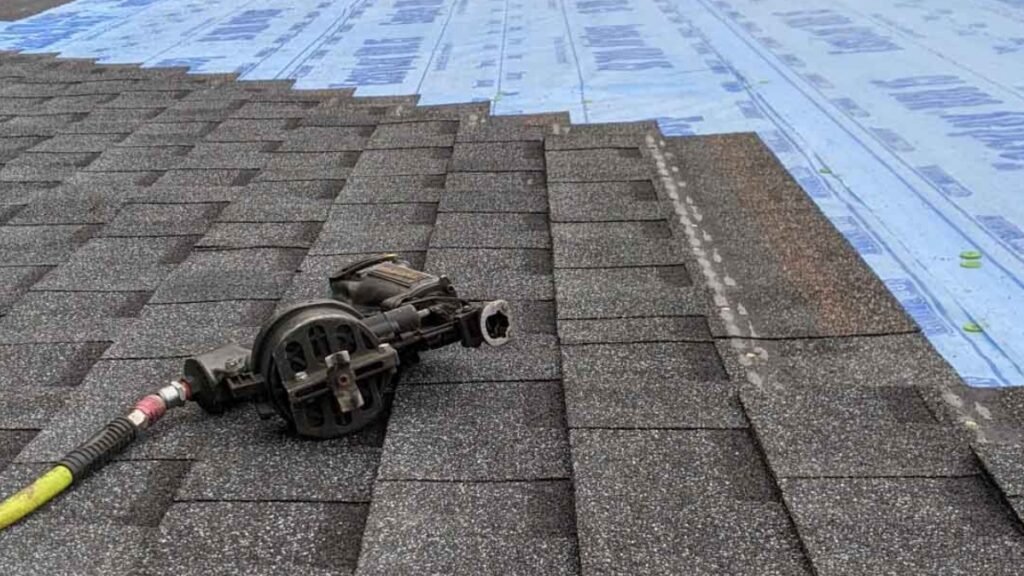
Loose nails or shingles that are raised can breach the roof’s water-tight seal. If that is occurring in some isolated spots, a patch is okay.
If it’s happening across big sections, it could be a sign that the entire roof system is aging out.
When It’s Just a Patch… and When It’s Not
If you’ve opted to involve an expert, they’ll have advice for you based on the unique condition of your roof. But, as a general guideline, consider the following when you decide how to address your roof damage:
Patch or Repair If…
- Problem is confined to a single location (such as a small leak or several broken shingles)
- The roof is younger than 10–15 years
- No evidence of moisture within the home or attic
- Roof has otherwise been well-maintained
Consider Replacement If…
- Widespread shingle damage, curling, or granule loss
- The roof is 15–20+ years old
- Sagging or structural movement is visible
- You’re going to sell or refinance soon and would like peace of mind
Final Words of Advice From Ramley
Catching a problem early can be the difference between an affordable repair and a significantly more costly replacement. Routine inspections—particularly following storms or changes in seasons—are the secret to maintaining a healthy roof.
If you’re unsure, don’t speculate. Our local crew will provide a straight answer regarding whether your roof requires a patch, a repair, or a complete replacement—no pressure, no upselling. Give us a call today!